



One wedding used to mean one outfit. Now it means four or five: a haldi in the morning, a mylanchi or sangeet the night before, the ceremony itself, and a reception that can run past eleven. If you are close to the family, you might be at all of them.
That is a lot of outfits to plan, and most of us are not buying a new lehenga for each one. So this guide goes function by function, with what actually works for each: the fabric, the colour, the silhouette, and how long you can wear it before you want to change.
One thing to keep in mind if you are attending weddings in Kerala or anywhere in the South this December or January: it is still warm, and halls get crowded. Fabric matters as much as the look.
Haldi: wear something you won't mind staining
Turmeric stains. Everyone knows this, and every year someone still turns up in ivory chanderi. The haldi is usually a daytime function, often outdoors or on a terrace, and there will be yellow paste on your hands, your sleeves and probably your dupatta.
What works:
• Cotton or cotton flax. It breathes in the morning heat and washes easily afterwards.
• Yellow, mustard, marigold or green. Stains disappear into them. Pastels show every mark.
• Short or three-quarter sleeves. Long sleeves end up in the haldi bowl.
• Skip the heavy dupatta, or pick a light one you can tie away.
A mustard kurti set is the easy answer. The Mustard Yellow Cotton Flax Angrakha Cut Kurti Set has the colour and the fabric right, and the embroidery keeps it from looking like daywear. For something simpler, browse yellow kurtis and green kurtis in cotton.
Mehendi and mylanchi night: colour, print and room to sit
Whether it is a North Indian mehendi or a Malabar mylanchi night, the shape of the evening is the same. You will sit for a long time while someone does your hands, then get up and dance once the songs start. Your outfit has to handle both.
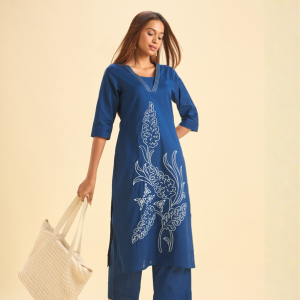
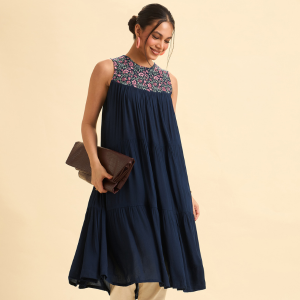
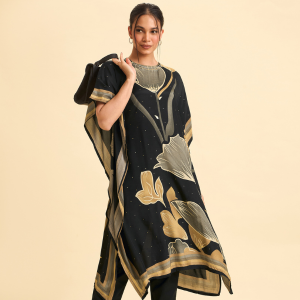
That rules out anything tight at the waist or anything you have to hold up while your mehendi dries. Flared kurtis and kurti sets with a relaxed fit do the job. So do kaftans, which are one of the most practical things to wear to a mylanchi: easy to sit in, nothing to adjust, and loose sleeves that stay clear of wet henna.
This is also the function where print is welcome. Bright multicolour prints, mirror work and bandhani style patterns all photograph well under fairy lights. Try the Mustard Yellow Viscose Printed Kaftan Set or the Bottle Green Flared Kurti with Mirror Work. The full kaftan collection has more options.
One practical tip: pick sleeves that end above the wrist. Henna on the forearm takes hours to dry.
Sangeet and the night before: this is where the shimmer goes
The sangeet, or the madhuram vaipu at a Kerala Christian wedding, is the night to go a little bolder. It is an evening event, the lighting is low, and everyone is dressed up but nobody is in their ceremony best yet.
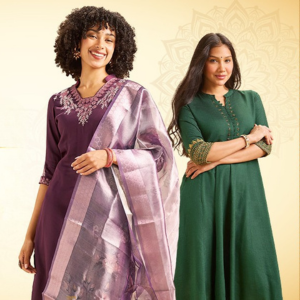
Shimmer fabrics, sequins and deeper colours belong here. Think lilac, black, wine and bottle green rather than the pastels you might save for the reception. A flared kurti set with a dupatta gives you movement on the dance floor without a lehenga's weight.
From the current Mirai collection, the Lilac Viscose Shimmer Flared Kurti Set and the Black Flared Kurti Set with Sequins both fit the brief. Black at a wedding used to be a no in many families. At an evening function, with sequins, it now reads as party wear, but check with the hosts if you are unsure.
The wedding day: rich, traditional, and not white or red
The ceremony is the most formal of the functions, and in Kerala it often starts early. A morning muhurtham or a church service at ten means you are dressed and travelling by eight. Plenty of women still choose a saree for this, and that is never wrong. But if you would rather not manage pleats in a packed hall, a well-made kurti set with a heavy dupatta looks just as dressed up.
Go for depth of colour and visible handwork: rust, orange, deep teal, maroon. Two colours to avoid as a guest are red, which usually belongs to the bride at a Hindu wedding, and white or ivory at a Christian one. Gold jewellery, which most of us will be wearing anyway, sits best against warm tones.
Good options from Vismay: the Rust Orange Mull Chanderi Kali Cut Kurti Set or the Orange Viscose Jacquard Kurti Set with Cut Bead Embroidery. Both come with a dupatta, so the look is finished without extra shopping.
Reception: softer colours, cleaner lines
By the reception, the rituals are done and the mood is closer to a dinner party. Halls are air-conditioned more often than not, the photos are posed, and there is usually a long queue to get on stage and greet the couple.
Pastels and soft neutrals work well here: onion pink, peach, powder blue, champagne. Keep the embellishment fine, such as thread embroidery, light sequins or a jacquard weave, rather than heavy mirror work. A structured silhouette looks sharper in stage photos than something very loose.
The Onion Pink Chanderi Flared Kurti Set, one of Vismay's current best sellers, is an easy pick. The Peach Flared Kurti Set with Hand Embroidery and the Denim Blue Jacquard Kurti Set are worth a look if pink isn't your colour.
Attending more than one wedding? Make one set do two jobs
December can mean three weddings in four weekends. Nobody needs fifteen new outfits for that. A kurti set with a separate dupatta can be restyled enough that it doesn't look repeated:
• Swap the dupatta. The same plain kurti looks festive with an embroidered dupatta and lighter with a printed one.
• Change the bottom. A matching pant reads formal. A contrast palazzo or skirt makes it feel new.
• Change the jewellery weight. Statement earrings for the sangeet, a simple chain for a daytime function.
• Wear the kurti alone with a different bottom at a smaller family function later in the season.
A plain, well-cut kurti in a solid colour like maroon, teal or ivory gives you the most room to restyle. Look through embroidered kurtis and kurti sets with that in mind.
The short version
|
Function |
Fabric |
Colours |
Silhouette |
|
Haldi |
Cotton, cotton flax |
Yellow, mustard, green |
Short sleeves, light or no dupatta |
|
Mehendi / mylanchi |
Viscose, crepe |
Bright prints, mirror work |
Flared kurti or kaftan |
|
Sangeet / madhuram vaipu |
Shimmer viscose, sequins |
Lilac, black, wine, bottle green |
Flared kurti set with dupatta |
|
Wedding day |
Chanderi, jacquard |
Rust, orange, teal, maroon (not red or white) |
Kurti set with heavy dupatta |
|
Reception |
Chanderi, jacquard |
Onion pink, peach, powder blue |
Structured, fine embellishment |
Vismay's kurti sets, co-ords and kaftans come in sizes XS to 3XL, with new styles every week. Shop the new arrivals online, or try them on at one of our stores across South India before the season gets busy.
FAQs
What should I wear to a haldi function as a guest?
A cotton kurti or kurti set in yellow, mustard or green. Turmeric stains, so skip pastels and silk, and keep sleeves short.
Can I wear a kurti set to a wedding instead of a saree?
Yes. An embroidered kurti set with a heavy dupatta, in a rich colour like rust, teal or maroon, is fully appropriate for the ceremony and easier to manage through a long day.
What colours should guests avoid at a Kerala wedding?
Avoid red at Hindu weddings, where it is often the bride's colour, and white or ivory at Christian weddings. Black is better kept for evening functions like the sangeet.
What is comfortable to wear to a mylanchi night?
A kaftan or a relaxed flared kurti. You will sit for long stretches while henna dries, so avoid fitted waists and long sleeves.
How can I re-wear one outfit across different weddings?
Buy a solid-colour kurti set with a separate dupatta. Change the dupatta, the bottom and the jewellery, and it reads as a different outfit.